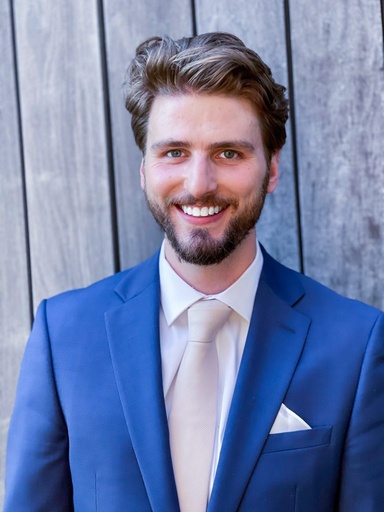
What drew you to join our department, and what excites you most about starting here?
The Department has a strong tradition of excellence in both sociology and criminology, which was particularly appealing to me as someone working across both fields. My conversations with faculty, students, and staff in the Department further confirmed that the University of Iowa is the right place for me to continue my academic career. I also grew up in Minnesota, just 30 miles north of the Iowa border, so I’m especially excited to return to the Midwest.
What kind of research projects are you working on right now?
My main ongoing research project is a book titled The New Reality of American Incarceration. The book builds on my previous and ongoing work on the extent, causes, and consequences of declining imprisonment rates and racial disparities in the United States.
In addition to my research on declining incarceration, I have several ongoing projects related to immigration enforcement, sentencing, and the sources of racial inequality in the criminal justice system. One project estimates the lifetime risk of deportation among immigrants living in the United States, with an emphasis on differences across gender, birth cohort, and country of origin. Another examines how criminal courts respond to natural disasters, using sentencing decisions during Hurricane Harvey in Texas as a case study.
A further project uses administrative records from Texas to examine which stages of the criminal justice process—arrest, prosecutorial charging, adjudication, and sentencing—contribute most to racial inequalities in imprisonment, and how these patterns have shifted in the context of recent reform efforts.
What will you be teaching next year?
In the fall, I will be teaching two undergraduate courses: Introduction to Criminal Justice and Immigration and Crime. I am excited to teach both, but I am especially looking forward to Introduction to Criminal Justice. I still remember taking a similar course as an undergraduate and how influential it was in shaping my academic and professional trajectory. I hope to have a similar impact on students in my own section.
More broadly, what excites me most about teaching is getting to know students—their interests, their goals, and how I can help them work toward those goals.
If you weren’t in academia, what do you think you’d be doing instead?
I often joke that in another life I would have been an architect. I find myself noticing buildings everywhere I go and appreciating their design. During my visit to Iowa City, I remember walking along the river and being especially struck by Hancher Auditorium, along with many other buildings in the area. I also find beauty in more ordinary structures, not just landmark architecture.
In college, I had a summer job as a fire alarm inspector, which required me to enter every room of every building I inspected. I spent the day moving through a wide range of spaces, many on college campuses, and it hardly felt like work—it was, in its own way, deeply enjoyable.
What’s your go-to productivity hack during a busy semester?
One strategy I find helpful is separating different types of work—research, teaching, and service—across different days. In academia, we are generally expected to divide our time roughly into 40% teaching, 40% research, and 20% service. Structuring the week around these categories helps maintain balance and focus.
For example, I often dedicate Mondays and Tuesdays to teaching-related work, Thursdays and Fridays to research, and use Wednesdays for a mix of both. Service work tends to be less predictable and is incorporated as needed throughout the week.
Tell us a bit about your interests/hobbies outside of work.
I enjoy just about any activity that gets me outside, including hiking, kayaking, biking, and walking around the neighborhood with my wife and dogs. I also enjoy cooking, though I am less enthusiastic about doing dishes.
In sports, I’ve long followed the Green Bay Packers, Minnesota Gophers, Wisconsin Badgers, and Iowa Hawkeyes. In basketball, my favorite player has always been LeBron James, and my favorite team has generally been whichever team he plays for. Now that his career is nearing its later stages, I am in search of a new favorite player—perhaps a former Hawkeye like Caitlin Clark.
What advice would you give students who are just starting out in this department?
The best advice I received early in graduate school came from Felix Elwert: “Hard work and happiness.” The idea is simple—give weight to happiness, because only you can decide what will make you happy. Hard work will be expected, but how you engage with it is ultimately up to you.
From my perspective, being a professor provides a strong balance between the two. I genuinely enjoy the work I do, which makes the hard work rewarding, and the flexibility of the profession allows for time with family, which is my greatest source of happiness. In the end, hard work and happiness do not have to be in tension—they can reinforce each other.